
What a Garage Door Making Loud Noises Means — and Why It Matters
A garage door making loud noises what they mean for your home’s safety and function is more urgent than most homeowners realize. That squeak, bang, or grind isn’t just annoying — it’s your door telling you something is wrong.
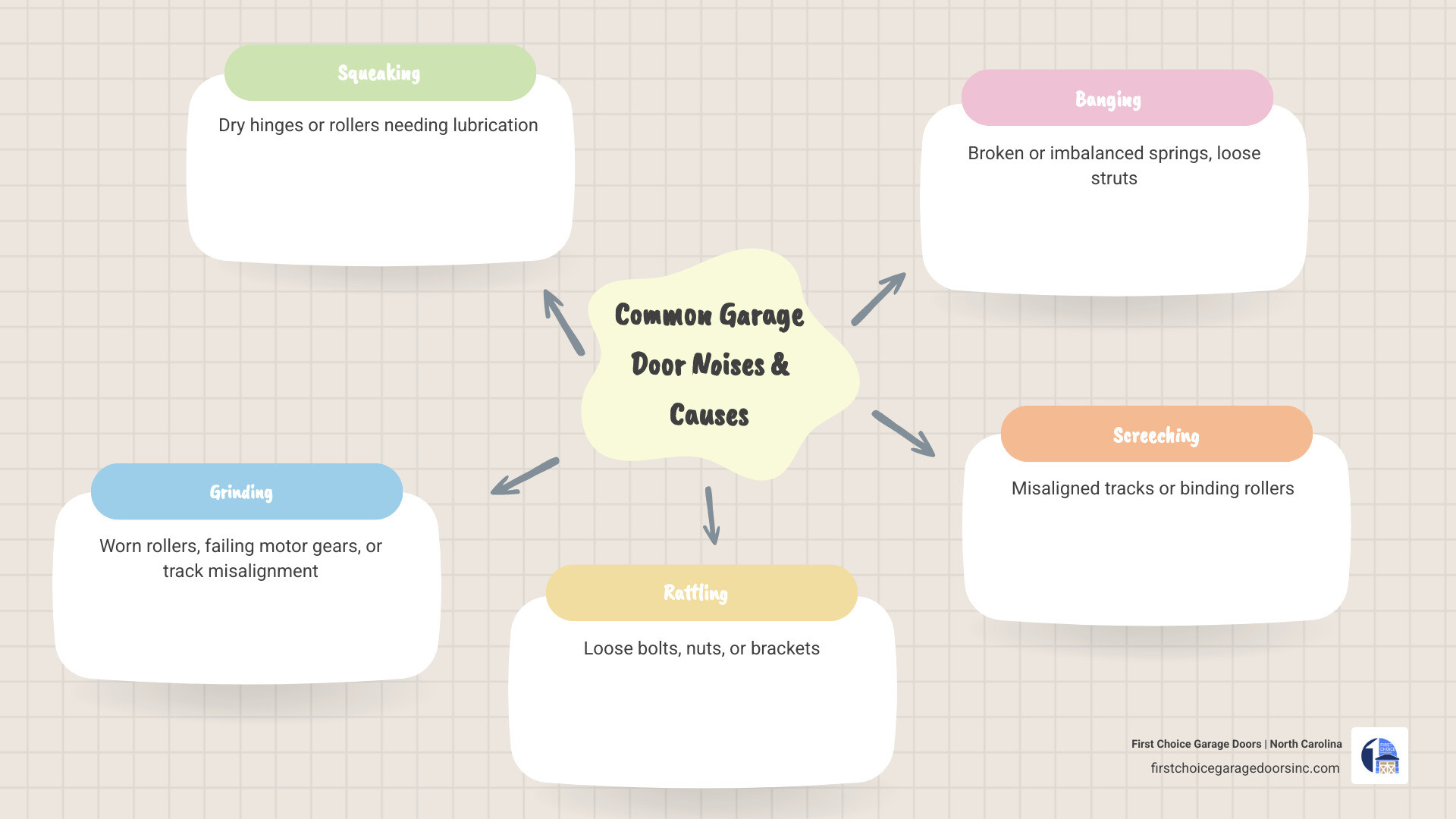
Here’s a quick breakdown of the most common sounds and what they signal:
| Noise | Most Likely Cause |
|---|---|
| Squeaking | Dry hinges or rollers needing lubrication |
| Grinding | Worn rollers, failing motor gears, or track misalignment |
| Rattling | Loose bolts, nuts, or brackets |
| Banging | Broken or imbalanced springs, loose struts |
| Popping | Spring tension issues or temperature-related material expansion |
| Screeching | Misaligned tracks or binding rollers |
| Humming | Opener motor or mounting hardware vibration |
Think about this: the average homeowner opens and closes their garage door three to four times a day — that adds up to well over 1,000 cycles every year. And with garage doors weighing anywhere from 130 to 400 pounds, a failing component isn’t just a nuisance. It can be a serious safety hazard.
The good news is that many noises have straightforward causes, and catching them early almost always means a simpler, less costly fix. Ignoring them, on the other hand, can turn a minor lubrication issue into a broken spring or a bent track — problems that are far more involved to resolve.
I’m Tony Aguilar, founder of First Choice Garage Doors with over 30 years of hands-on experience diagnosing exactly the kind of garage door making loud noises what they mean problems that homeowners across North Carolina deal with every day. In this guide, I’ll walk you through every common sound, what’s causing it, and what to do next.
Decoding Your Garage Door Making Loud Noises What They Mean

When we talk about a garage door making loud noises what they mean, we are essentially translating a mechanical language. Your garage door is a complex system of springs, cables, pulleys, and tracks, all working in harmony. When one part begins to fail, the harmony breaks, and the noise begins.
Understanding Why Your Garage Door Is Noisy is the first step toward reclaiming your peace and quiet. In Fayetteville, we see everything from dust-clogged tracks to hardware that has simply reached the end of its lifespan.
Identifying Your Garage Door Making Loud Noises What They Mean by Sound
The specific “flavor” of the noise tells us where to look.
- Squeaking and Screeching: This is often the “fingernails on a chalkboard” of the garage world. It usually indicates metal-on-metal friction. If your hinges are dry or your rollers are sticking, they will shriek as they struggle to move.
- Grinding: This is a more aggressive sound. It often points to worn-out bearings in the rollers or a drive gear in the opener that is losing its teeth.
- Rattling: Think of this as the “loose change” sound. It’s almost always caused by nuts and bolts that have vibrated loose over those 1,000 annual cycles.
- Popping: This can be particularly startling. While sometimes it’s just the metal panels expanding in the North Carolina heat, it can also signal that your torsion spring is binding or “winding” unevenly.
There are More Reasons A Garage Door Could Become Noisy than just old age; sometimes, it’s a matter of improper initial installation or low-quality parts that can’t handle the weight of a heavy door.
Understanding Your Garage Door Making Loud Noises What They Mean for Safety
Safety is our primary concern at First Choice Garage Doors. When you hear a sudden, loud BANG, it’s often the sound of a spring snapping.
- Torsion Springs: These are the heavy-duty springs located above the door. They are typically rated for about 10,000 cycles. In a busy household, that might only last 7 to 10 years.
- Extension Springs: These run along the upper tracks. While some are rated for up to 20,000 cycles, they are still under immense tension.
If you hear a noise and notice the door is moving crookedly or feels unusually heavy, stop using it immediately. A door that falls because of a broken cable or spring can cause devastating injury. For more safety alerts, check our Tag/Noisy Garage Door section for real-world examples of what to watch out for.
Why is my garage door so loud when opening in Fayetteville?
Living in Fayetteville, NC, means our garage doors deal with humidity and temperature swings that can affect how parts fit together. If you’re wondering why your door sounds like a freight train every morning, consider the components. One of the biggest upgrades we recommend is switching from metal to nylon rollers.
| Feature | Metal Rollers | Nylon Rollers |
|---|---|---|
| Noise Level | High (Metal-on-metal clatter) | Low (Quiet, smooth glide) |
| Lubrication Needs | Frequent | Minimal |
| Lifespan | 10–15 years (can rust) | Up to 20 years (rust-proof) |
| Price | Budget-friendly | Slightly higher |
Beyond rollers, several factors contribute to the racket:
- Lack of Lubrication: This is the #1 cause of noise. Without a protective layer of silicone or lithium grease, metal parts grind against each other, creating heat and friction.
- Track Misalignment: If the tracks aren’t perfectly vertical or are slightly bent, the rollers will “bind” or rub against the sides, causing a screeching sound.
- Loose Hardware: Your garage door vibrates every time it moves. Over time, the nuts holding the hinges and the bolts securing the tracks can back out.
- Debris Buildup: Dust, pet hair, and old, hardened grease can build up in the tracks, acting like speed bumps for your rollers.
- Weatherstripping Wear: If the rubber seal at the bottom or sides is brittle, the door may slap against the frame or vibrate excessively in the wind.
If you’re in a nearby area, you might find our guide on How To Keep Your Manassas Garage Door Moving Quietly helpful for specific regional tips on fighting rust and vibration.
How can I safely fix a noisy garage door myself?
As of April 2026, many homeowners prefer a proactive approach to home maintenance. While complex repairs should always be left to us, there are several steps you can take to quiet a garage door making loud noises what they mean for your weekend chores.
Step 1: Disconnect the Power. Safety first! Unplug the garage door opener so the door cannot be activated while your fingers are near the tracks. Step 2: Tighten the Nuts and Bolts. Using a socket wrench, check the hinges and the brackets that hold the tracks to the wall. Do not overtighten, as you could strip the screw holes in the thin metal. Step 3: Clean the Tracks. Use a damp cloth to wipe out the inside of the tracks. Do not lubricate the inside of the tracks; this actually attracts dirt and creates a “sludge” that makes the noise worse. Step 4: Lubricate the Moving Parts. This is the “magic fix” for most squeaks.
Recommended Lubricants:
- Silicone Spray: Excellent for nylon rollers and hinges.
- White Lithium Grease: Best for metal-on-metal contact points like the opener’s screw drive or chain.
- Avoid WD-40: Standard WD-40 is a degreaser/solvent, not a long-term lubricant. It will actually strip away existing grease and make the door noisier over time.
For a deeper dive into the tools and techniques we use, visit our page on garage door maintenance.
When should I seek professional garage door repair in North Carolina?
There is a fine line between a DIY project and a dangerous situation. Because garage doors can weigh up to 400 lbs and rely on high-tension springs, some tasks are strictly for professionals.
You should call First Choice Garage Doors immediately if you notice:
- A Broken Torsion Spring: You will see a visible gap in the coils of the spring above the door. Never attempt to replace this yourself; the torque required can be lethal.
- Frayed Cables: If the steel cables on the sides of the door look “fuzzy” or have broken strands, they are about to snap.
- Severe Track Realignment: If the track is physically bent from a car bump or a loose bracket, forcing the door to move can damage the panels.
- Sensor Malfunctions: If your door reverses for no reason and makes a clicking sound, the safety eyes may be misaligned or failing.
Our technicians have the specialized winding bars and tension gauges needed to handle these high-risk components safely. You can learn more about our specific garage door repair services to see how we tackle these complex issues in Fayetteville and beyond.
Frequently Asked Questions About Noisy Garage Doors
Why is my garage door making a loud grinding noise?
A grinding noise is usually a sign of mechanical “stress.” If it’s coming from the motor unit, the internal drive gear (often made of reinforced plastic) may be stripped. If it’s coming from the tracks, your rollers might have “frozen” bearings, meaning they are sliding instead of rolling. This creates flat spots on the rollers and puts immense strain on the motor. We recommend checking our garage door openers section if you suspect the motor is the culprit.
Is a noisy garage door dangerous to operate?
It certainly can be. A noise is a symptom of an underlying mechanical failure. A “banging” door often means it is out of balance. If the door isn’t balanced, the opener has to “work” much harder to lift the weight, which can lead to the motor burning out or, worse, the door crashing down if a cable snaps. A quiet door is a safe door.
How often should I lubricate my garage door components?
We recommend a “Lube and Tune” at least twice a year—ideally in the spring and fall. In North Carolina, the change in humidity can cause metal components to expand and contract. Regular application of a silicone-based spray to the hinges, rollers, and springs will keep the system moving smoothly and extend the life of your hardware significantly.
Conclusion
At First Choice Garage Doors, we believe your home should be a place of peace, not a place where you dread the sound of the garage door opening. Whether you are in Fayetteville, NC, or any of our other service locations like Manassas, VA, or Columbia, MD, our mission is to provide professional, prompt service that prioritizes your safety.
Don’t let a small squeak turn into a major replacement. If you’re tired of the racket, let our experienced team handle the heavy lifting. Schedule your Fayetteville garage door repair today and experience the sound of silence for yourself.